10 e-Reader Game Series Nintendo Needs to Bring Back (And How They'd Work Today)
Let's be honest: Nintendo has never been shy about revisiting its own catalog. Virtual Console, Nintendo Switch Online, the endless parade of remasters — the company knows its back catalog is a goldmine. So it's a little baffling that the e-Reader, one of the most genuinely inventive peripherals Nintendo ever shipped, has been left completely untouched.
For those who need a refresher: the e-Reader was a Game Boy Advance accessory that let you scan printed cards embedded with "dot code" strips to unlock mini-games, in-game bonuses, and interactive content. It launched in the US in 2002, never quite caught on commercially, and was quietly retired by 2004. But the game series it hosted? Some of them were legitimately great — or at least fascinating enough that they deserve a second look.
Here's our ranking of the ten e-Reader game series that deserve a modern revival, along with some thoughts on how Nintendo could make them work on current hardware. Disagree with the order? Good. That's what the comments section is for.
10. Donkey Kong Jr. Math-e
Okay, hear us out. The e-Reader's educational math cards were nobody's idea of a blockbuster, but there's a real charm to the concept of wrapping arithmetic drills inside a classic arcade framework. In an era where Nintendo Switch has become a legitimate family gaming device and parents are actively looking for educational software, a modern "Nintendo Learning Cards" system built around beloved characters could find a genuine audience. The bones are there. Someone just needs to build on them.
9. Golf-e
The Golf cards offered stripped-down, almost zen-like mini-golf scenarios that you could complete in under five minutes. That format feels oddly prescient in a mobile gaming landscape dominated by casual pick-up-and-play titles. A modern equivalent — imagine scannable cards that unlock Golf courses in Nintendo Switch Sports or a dedicated mobile app — could scratch the same itch while fitting naturally into how people play games today.
8. Excitebike-e
The Excitebike e-Reader series let players design custom tracks and share them via card — which was, genuinely, a primitive but functional version of user-generated content sharing. In 2002. On a card. The fact that Nintendo has since built entire games around UGC (hello, Super Mario Maker) makes revisiting Excitebike through that lens feel like a natural fit. A card-based track-sharing system for a modern Excitebike revival would be a delightful throwback that actually makes mechanical sense.
7. Kirby's Pinball-e
Kirby and pinball go together surprisingly well — the character's round, bouncy design translates perfectly to the physics of the format. The e-Reader Kirby pinball tables were compact and satisfying, and there's a real appetite for quality pinball games on Nintendo hardware (just ask the folks who still play Metroid Prime Pinball). A full Kirby pinball experience with card-unlockable tables and characters feels like something HAL Laboratory could knock out of the park.
6. Mario Bros.-e
The classic arcade Mario Bros. — not the platformer, the original two-player brawler — got a solid e-Reader treatment that holds up better than you might expect. There's a case to be made that Nintendo Switch Online is the right home for a revived version, with cards (physical or digital) unlocking new stage variants, enemy types, and cooperative challenges. The two-player couch co-op appeal is timeless.
5. Fire Emblem-e
Here's a series entry that feels almost criminally overlooked. Japan received Fire Emblem e-Reader cards that added new maps and characters to Fire Emblem: The Blazing Blade — content that North American players never officially got. Given that Fire Emblem has become one of Nintendo's most commercially successful franchises in the US (largely thanks to Awakening and Three Houses), the idea of physical card-based DLC for a Fire Emblem title feels like it could genuinely move product. Imagine scannable cards sold alongside a new Fire Emblem release, each unlocking a side mission or character backstory. Collectors and fans would eat it up.
4. Animal Crossing-e
The Animal Crossing e-Reader cards were arguably the most sophisticated use of the technology in the entire North American library. Cards unlocked new villagers, furniture items, and NES mini-games inside Animal Crossing on GameCube — a genuinely impressive feat of cross-platform integration. Nintendo has already proven with Animal Crossing: New Horizons that the fanbase will spend real money on character cards (Amiibo sales were massive). A dedicated line of dot-code or NFC cards for the next Animal Crossing title, each unlocking unique villagers or seasonal items, feels less like a pipe dream and more like an obvious business decision.
3. The Legend of Zelda: Four Swords Adventures-e
The Zelda e-Reader cards that worked with Four Swords Adventures on GameCube represented something genuinely ambitious: cards that modified the gameplay experience of a full console title in real time. That ambition deserves recognition, even if the execution was limited by the technology of the era. A modern equivalent — Zelda cards that unlock challenge rooms, cosmetic items, or lore entries in a title like Echoes of Wisdom or a future entry — would feel right at home alongside Nintendo's existing Amiibo ecosystem.
2. Pokémon-e
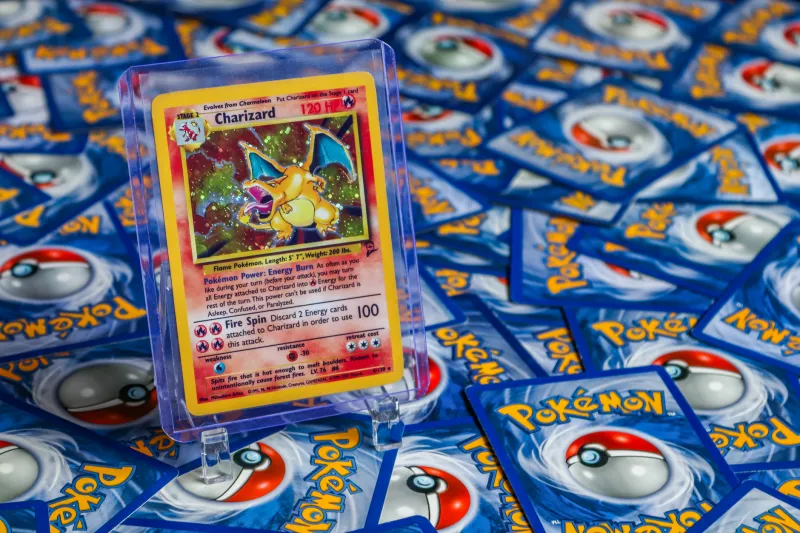
This one barely needs explanation. The Pokémon e-Reader cards were the flagship series for the peripheral in North America, and they delivered — Pokémon battle data, Pokédex entries, and e-Reader-exclusive mini-games tied to the main series games. In the current era of Pokémon TCG Pocket and ongoing physical card game dominance, the concept of scannable cards that bridge physical collecting and digital gameplay is more relevant than ever. The Pokémon Company has the infrastructure, the fanbase, and the commercial incentive. A modern revival of the dot-code card concept within the Pokémon ecosystem feels not just possible but almost inevitable — if someone at Nintendo is paying attention.
1. Mario Party-e
Top spot goes to Mario Party-e, and it's not particularly close. The e-Reader Mario Party series translated the chaotic, social energy of the console games into a card-based format that genuinely worked as a standalone party game experience. Players used cards to trigger mini-games, set traps, and interact with a physical board — no TV required. In a post-pandemic gaming landscape where tabletop gaming has experienced a massive cultural resurgence in the US, a modern Mario Party card game with scannable components and optional app integration feels like an absolute slam dunk. It's accessible, it's social, it's portable, and it carries one of Nintendo's most recognizable party game brands.
The Bigger Picture
Looking at this list, a pattern emerges: the e-Reader's best series weren't successful despite their hybrid physical-digital format — they were compelling because of it. The tactile experience of holding a card, choosing which one to scan, building a physical collection — these things add a layer of engagement that purely digital content can't replicate.
Nintendo clearly understands this on some level. Amiibo figures have sold hundreds of millions of units. The Pokémon TCG continues to be a cultural phenomenon. The appetite for physical objects that do something digital is very much alive.
The e-Reader was ahead of its time. The question is whether Nintendo is willing to revisit that idea with the resources and distribution muscle it now commands. We think the answer should be obvious.
What's your ranking? Drop your top picks in the comments — we genuinely want to know which e-Reader series you'd bring back first.