Real, Fake, or Fan-Made? Navigating the e-Reader Card Reproduction Market Without Getting Burned
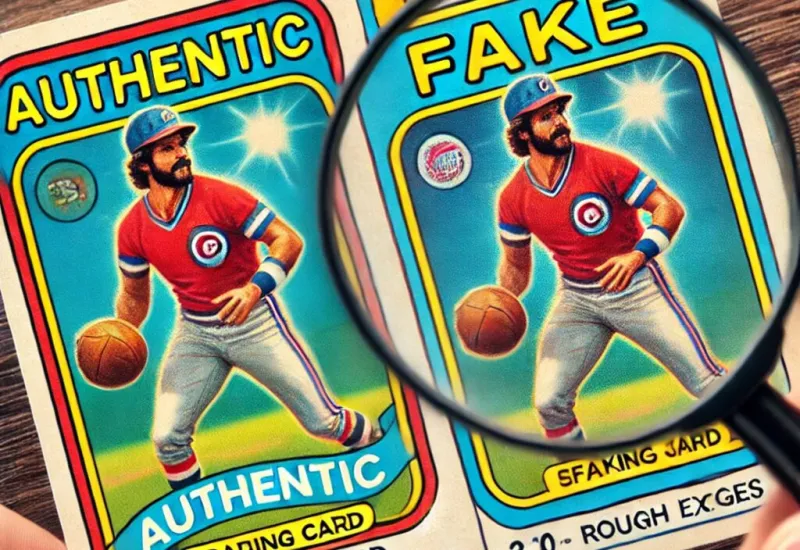
Photo: counterfeit trading cards comparison authentication magnifying glass, via tcgrepublic.in
If you've been shopping for e-Reader cards on eBay, Mercari, or in the wild at retro game stores lately, you may have already run into the problem without knowing it. The listings look right. The cards look right. The price might even look right. And then you get them home, scan them, and everything works — which is actually the most confusing outcome of all, because it means you still don't know for sure what you bought.
The e-Reader card reproduction market has matured significantly over the past few years, and not in a direction that makes collecting easier. Alongside the genuinely fan-made homebrew cards that the community openly celebrates, there's a growing volume of commercially motivated reprints — some of them close enough to the originals that even experienced collectors have been fooled. Understanding the difference between these categories isn't just an academic exercise. It affects what you're paying, what you own, and where you stand within the collector community.
Three Types of Reproduction (And Why They're Not the Same Thing)
The first thing worth getting straight is that "reproduction" covers a lot of ground, and lumping everything together creates more confusion than it resolves.
Fan-made homebrew cards are original creations — new games or utilities built by community developers and distributed on physical cards. These aren't pretending to be Nintendo products. They're clearly labeled as community projects, usually sold at cost or given away at events, and the e-Reader community has broadly embraced them as a creative extension of the platform. Nobody's getting deceived here.
Transparent reprints are reproductions of existing Nintendo cards that are openly marketed as such. The seller isn't hiding what they are — they're offering functional copies of rare cards to collectors who want to play the games without paying secondary market prices for originals. These exist in a grayer ethical space, but the transaction is honest.
Counterfeit cards are reproductions sold as originals — either explicitly misrepresented or listed ambiguously in ways designed to let buyers assume they're getting genuine Nintendo products. These are the ones that should genuinely concern you, both because you might overpay and because they're eroding trust in the secondary market overall.
The problem is that the physical quality gap between these categories has narrowed considerably. A well-made transparent reprint and a counterfeit card might be produced using identical methods. The difference is entirely in how they're sold and labeled — which means the burden of verification falls on the buyer.
How to Spot a Reproduction Card
The good news is that there are reliable tells if you know where to look. The bad news is that checking for all of them takes more effort than most casual buyers are willing to put in.
Paper stock and printing quality are your first line of defense. Authentic Nintendo e-Reader cards were printed on a specific card stock with a distinctive texture and sheen. Reproductions — even high-quality ones — tend to use slightly different materials that feel subtly off in hand. The difference is easier to feel than to describe, which is why handling a known-authentic card first is genuinely valuable before you start buying blind.
Dot code density and alignment can reveal reproduction origins under magnification. The original printing process produced dot codes with very precise spacing and edge definition. Inkjet or laser-printed reproductions often show slight irregularities in dot shape or spacing that are invisible to the naked eye but obvious under a loupe or macro lens. Some collectors have started carrying jeweler's loupes to retro game stores for exactly this reason.
Back-of-card printing is another reliable check. The text, legal language, and Nintendo branding on the back of authentic cards was printed with specific ink coverage and color values. Reproductions frequently get the front dot code right while leaving visible color or registration discrepancies on the back, particularly around the Nintendo logo and copyright text.
Serial numbers and set identifiers are worth cross-referencing against documented databases. The e-Reader community has built reasonably comprehensive card catalogs that include known serial number ranges for authentic sets. A card with a serial number that doesn't match any documented authentic example is worth treating with skepticism.
The Ethics Question the Community Can't Agree On
Here's where things get genuinely complicated: a meaningful portion of the e-Reader community thinks some level of reproduction is not just acceptable but actively good for the hobby.
The argument goes roughly like this: Nintendo is not selling these cards. They have not sold them since 2004. There is no legitimate retail channel through which a new collector can access the full e-Reader library. The only way to experience rare titles is to compete in a secondary market where prices for complete sets of certain games have climbed well past what a casual fan can reasonably spend. In that context, functional reprints lower the barrier to entry without taking revenue from anyone who's currently selling the product.
The counterargument is less about Nintendo's interests and more about the collector market itself. When high-quality reproductions circulate alongside originals without clear labeling, they degrade the reliability of the entire secondary market. Collectors who paid original prices for what they believed were authentic cards have a legitimate grievance when the same functional experience becomes available for a fraction of the cost — especially if they later can't verify what they actually own.
Both positions have merit, and the community hasn't landed on a consensus. What most people do agree on is that transparency is the minimum standard: if you're selling a reproduction, label it as one. The ethical problems in this space are almost entirely downstream of misrepresentation.
Protecting Yourself as a Buyer
Practically speaking, a few habits will protect most collectors from the worst outcomes. Buy from sellers with established reputations in e-Reader-specific communities — Discord servers and dedicated forums are better vetting environments than open marketplace listings. Ask direct questions about authenticity before purchasing anything in a higher price range, and don't treat a working scan as proof of originality.
If you're building a collection you care about maintaining the integrity of, document your purchases with photos and provenance notes. The collector community's shared knowledge base is your best resource — if something looks off, ask before you commit.
The reproduction market isn't going away. If anything, it's going to keep growing as original cards get scarcer and demand stays high. Learning to navigate it clearly is just part of being an e-Reader collector in 2024.