Party Like It's 2002: The e-Reader's Untapped Local Multiplayer Scene Nobody Talks About
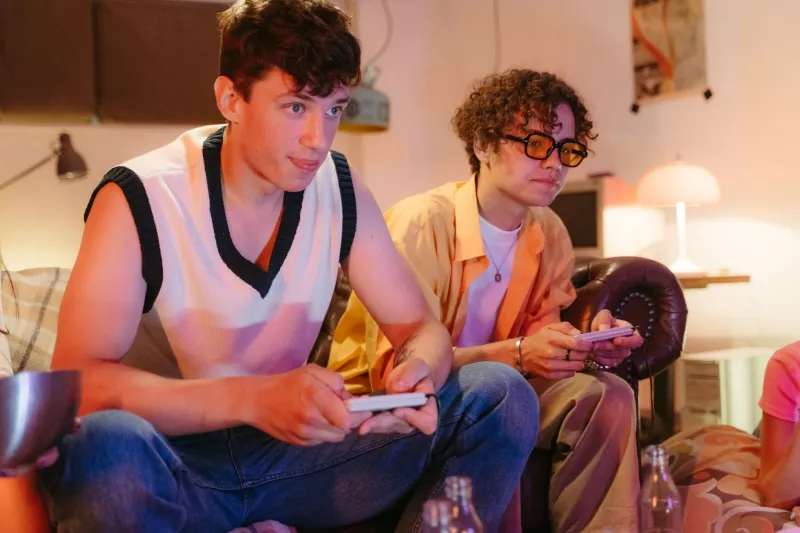
Picture this: four kids crowded around a folding table at a birthday party in 2002, each one clutching a Game Boy Advance, a stack of cards fanned out in front of them like a hand of poker. No router. No account login. No update required. Just four link cables, one e-Reader peripheral each, and a shared willingness to swipe tiny dot codes until something magical happened on screen.
That image never really became a cultural moment the way Nintendo probably hoped. But the infrastructure to make it real? That was absolutely there. The e-Reader's multi-player connectivity features were genuine, technically clever, and almost entirely forgotten — and the more you dig into what Nintendo actually built, the more you start to wonder why nobody ever talks about it.
What the e-Reader Was Actually Capable Of
Most people who remember the e-Reader at all think of it as a solo experience. You swiped a card, a mini-game launched, you played for a few minutes, and that was that. Simple, charming, a little limited. That's a fair summary of how the device was used in practice, but it undersells what the hardware was designed to support.
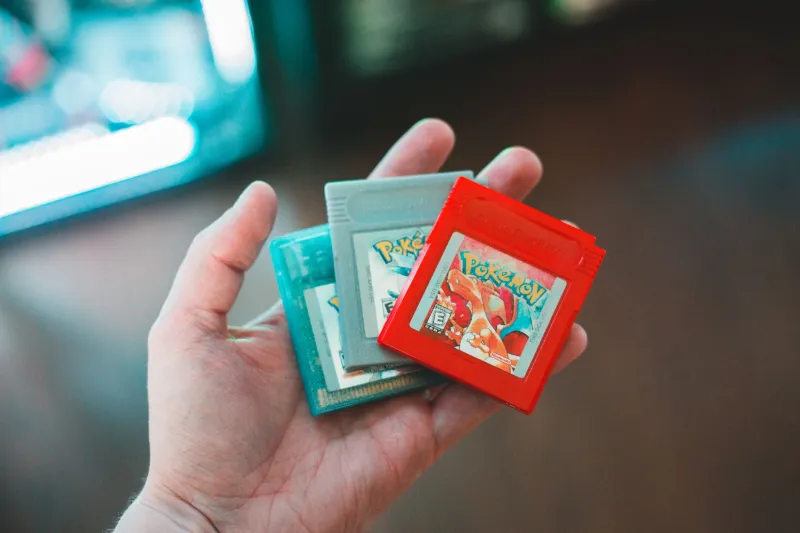
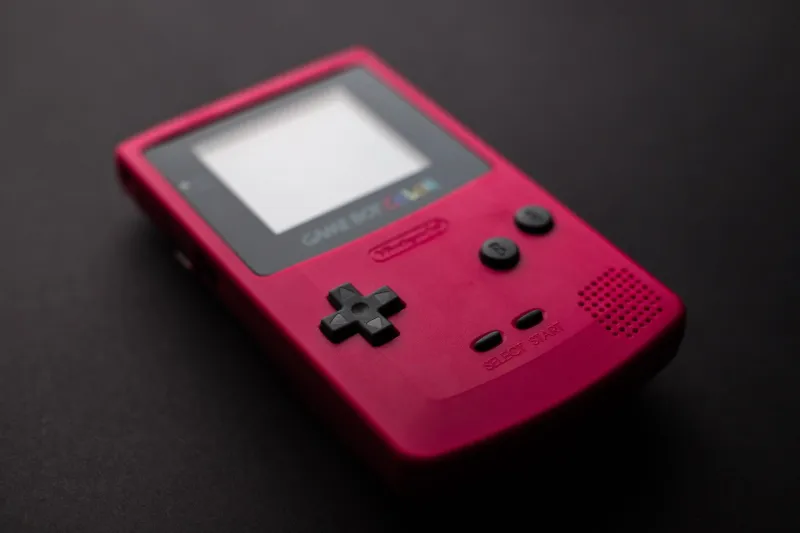
The GBA's link cable port wasn't just decorative on the e-Reader. Nintendo built the peripheral with multi-player sessions in mind from the start. Using standard link cables — the same ones you'd chain together for a four-player Pokémon trade — multiple e-Reader units could communicate with each other mid-session. Select card sets were specifically designed around this, with mechanics that only made sense when more than one player was scanning and participating simultaneously.
The e-Reader version of certain Mario Party promotional cards leaned into this. So did some of the Japan-exclusive releases that never made it stateside, which used multi-card interactions to unlock cooperative puzzle content. The hardware handshake was real. The software support was just... sparse.
The Social Angle Nintendo Never Fully Committed To
Here's the thing about local multiplayer in the early 2000s: it was the social gaming experience for a huge chunk of American kids. LAN parties were a PC thing. Console multiplayer meant sharing a couch and a TV. Handheld multiplayer meant link cables and proximity. The GBA era was actually a high point for that kind of physical, in-person gaming culture — Pokémon, Mario Kart: Super Circuit, F-Zero: Maximum Velocity all leaned hard into it.
The e-Reader should have been a natural fit for that world. Imagine a dedicated card set built entirely around a four-player party game framework. Each player brings their own deck, scans their own cards to load their character or power-ups, and then everyone competes or cooperates through a shared mini-game session. It's basically what trading card games and board games had been doing for decades, translated into a digital-physical hybrid format that the GBA was uniquely positioned to pull off.
Nintendo had the pieces. They just never assembled them into anything that landed with enough force to stick in the cultural memory.
Part of that was marketing. The e-Reader's US rollout leaned heavily on the novelty of the scanning mechanic itself — look, you swipe a card and something happens on screen! — rather than on the social potential of what multiple players could do together. The multiplayer angle got buried under demo kiosks showing off single-player mini-games, and it never really climbed back out.
What Made It Technically Interesting
Let's give credit where it's due, because the engineering here was genuinely thoughtful for its time.
The dot code format the e-Reader used — Nintendo's proprietary take on a 2D barcode — was capable of storing more data than it looked like. A single card strip could carry enough code to define not just a game state but variables that would interact with data scanned from a different card on a different unit. That's not trivial. That's a distributed data architecture running on hardware with the processing power of a late-'90s pocket calculator.
The synchronization worked through the link cable connection, which meant there was a real-time handshake happening between units as players scanned. One machine could act as a host, pulling in data from connected units and resolving the combined game state. For 2002, that was a legitimately clever piece of systems design.
The limitation wasn't the concept — it was throughput and latency. Scanning a card took a few seconds. Doing that four times across four players before a round could start introduced friction that a digital-only system wouldn't have. Modern game designers talk a lot about "onboarding friction" as an enemy of player retention, and the e-Reader's physical scanning step was friction by definition. Nintendo never quite figured out how to make that friction feel like fun rather than a loading screen with extra steps.
What Modern Designers Could Actually Learn From This
This isn't just a nostalgia exercise. There's a real design conversation buried in the e-Reader's multiplayer experiments that's worth having in 2024.
Physical-digital hybrid gaming has made a significant comeback in the years since the e-Reader faded out. amiibo figures, Skylanders, Jackbox games that use smartphones as controllers, even Pokémon GO's real-world exploration mechanics — all of these are working through versions of the same fundamental question the e-Reader was wrestling with: how do you make a physical object feel like an essential, meaningful part of a digital experience rather than a gimmick bolted on for marketing reasons?
The e-Reader's multiplayer framework actually got closer to an answer than it's given credit for. The idea that each player owns their own piece of the game — literally holds it in their hands, brings it to the session, contributes it to the shared experience — is a compelling social dynamic. It's why trading card games have sustained massive communities for thirty years. The e-Reader was trying to bring that dynamic to video games before the industry had really figured out how to talk about it.
Where it fell short was in making the payoff feel proportional to the effort. Scanning four cards across four GBAs to unlock a 90-second mini-game wasn't a great trade. But scale that concept up — deeper games, longer sessions, more meaningful card interactions — and you've got something that could genuinely work.
The Party That Never Got Started
It's easy to look back at the e-Reader and see a device that was ahead of its time in some ways and behind the curve in others. The multiplayer infrastructure is one of the clearest examples of the former. Nintendo built a local social gaming system that anticipated ideas the industry wouldn't fully explore for another decade, then released it into a market that wasn't ready to understand what it was looking at.
The four-player sessions that were technically possible on that folding table in 2002 mostly stayed theoretical. The cards that could have powered them are scattered across eBay listings and collector binders now, their dot codes still intact, still waiting to be swiped.
Somewhere in there is a lesson about execution, timing, and the gap between what hardware can do and what players actually experience. The e-Reader's multiplayer revolution was real. It just never got its party.