Dot Codes, Reimagined: The Indie Developers Breathing New Life Into Scan-to-Play in 2024

Photo: indie developer working on retro game project with physical cards and laptop, via img.freepik.com
There's a version of history where the Nintendo e-Reader was a massive commercial success. Where scanning physical cards to unlock game content became as natural as inserting a cartridge. Where the entire concept of bridging printed media and interactive software became a cornerstone of mainstream gaming rather than a footnote. That version of history didn't happen — but the idea? The idea absolutely refused to stay buried.
In 2024, a loose but passionate network of indie developers, artists, and retro tech enthusiasts are actively building scan-based interactive experiences. Some are working directly with e-Reader hardware. Others are using modern tools to chase the same fundamental concept. All of them, knowingly or not, are continuing a conversation Nintendo started and then abruptly walked away from.
The Seed Nintendo Planted
To understand why people keep coming back to scan-to-play concepts, it helps to revisit what made the e-Reader compelling in the first place. It wasn't just novelty — though there was plenty of that. It was the tactile handshake between a physical object and a digital world. You held something real, something you owned, something you could trade or collect, and that physical thing did something. It changed what was on your screen.
That loop — physical ownership creating digital consequence — is something the industry has chased in various forms ever since. amiibo. Skylanders. Loot boxes with physical components. QR codes on product packaging. None of them quite nailed the feeling of dragging a card through a scanner and watching a game respond in real time, but they were all chasing the same ghost.
The indie developers working in this space in 2024 know that history. Many of them are explicit about it.
Projects Worth Watching
The homebrew e-Reader community has been active for years, but what's changed recently is the scope and ambition of new projects. Where earlier efforts focused primarily on preserving or emulating existing card data, current projects are pushing into genuinely new creative territory.
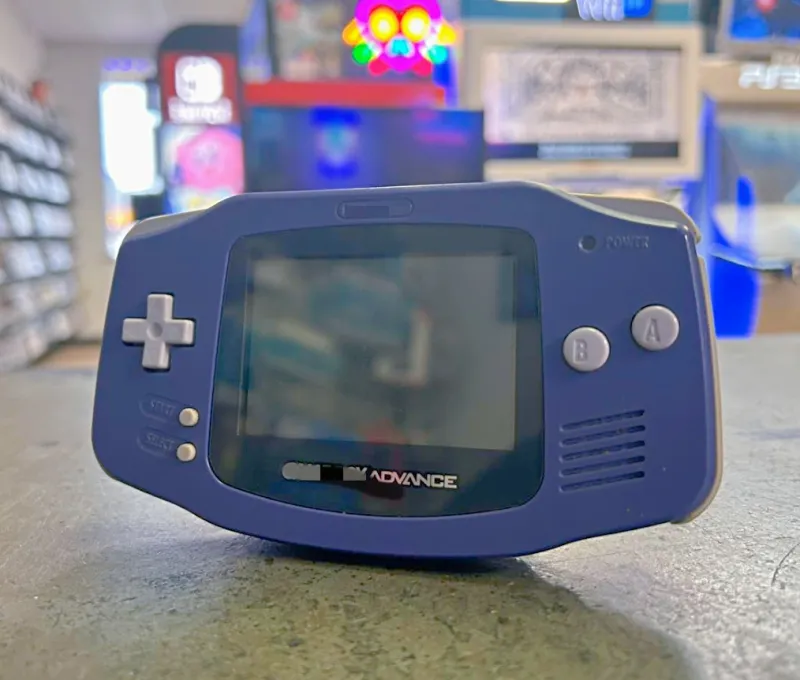
Several developers in the retro gaming homebrew scene have built custom dot-code generators — software tools that allow anyone to encode original game data into a printable dot-code strip formatted to e-Reader specifications. This means entirely new games, designed from scratch in 2024, can be printed onto physical cards and played on original hardware. It's a concept that would have seemed like science fiction to a kid opening e-Reader packs in 2002.
Beyond direct e-Reader compatibility, a handful of indie studios have been experimenting with what you might call "dot-code-adjacent" mechanics — scan-triggered gameplay elements that use modern smartphone cameras instead of dedicated hardware. These projects borrow the philosophy of the e-Reader (physical object, digital unlock, tactile engagement) while updating the delivery mechanism for contemporary players who don't own a Game Boy Advance.
One particularly interesting project pairs physical zines — printed booklets distributed at indie game festivals — with QR codes that unlock companion game content. The creators have openly cited the e-Reader as a direct inspiration, describing it as "the platonic ideal of what physical-digital integration should feel like."
QR Codes and the Road Not Taken
It's impossible to talk about scan-based gaming in 2024 without acknowledging QR codes, which essentially won the mainstream version of the race the e-Reader was running. They're everywhere, they work on any smartphone, and they've become so ubiquitous that most people don't think of them as technology at all anymore — they're just... a thing on a menu.
But QR codes, for all their utility, stripped out the part that made the e-Reader interesting. There's no game in scanning a QR code. There's no craft to it, no feedback loop, no sense that the physical object itself is doing the work. A QR code is a URL with extra steps. A dot-code strip was a game cartridge made of paper.
The indie developers working in this space understand that distinction intuitively. The ones doing the most interesting work aren't just using QR codes — they're thinking hard about how to reintroduce the intentionality of the e-Reader experience into modern contexts. How do you make scanning feel like play rather than administration?
The Maker Community's Role
Outside of traditional game development, the broader maker and DIY tech community has been quietly experimenting with e-Reader-inspired hardware. Raspberry Pi enthusiasts have built custom scanning setups that can read dot-code strips and trigger software events — essentially recreating the e-Reader's core function with off-the-shelf components and open-source software.
These builds have shown up at maker faires, retro gaming conventions, and on YouTube channels dedicated to hardware hacking. They're not polished consumer products, but they demonstrate something important: the concept of the e-Reader is fully reproducible with modern tools, which means it's fully extensible. Somebody could build a better e-Reader today, and the barrier to entry is lower than it's ever been.
Why This Matters for e-Reader Fans
If you're reading this site, you probably already have a soft spot for the original hardware. But the activity happening in indie and maker spaces right now isn't just trivia — it's validation. Every developer who cites the e-Reader as an influence, every project that recreates its core loop in a new context, every maker who builds a custom scanner because they think the concept deserves a second chance, is making an argument that Nintendo was onto something real.
The e-Reader didn't fail because scan-to-play was a bad idea. It failed because the market wasn't ready, the hardware ecosystem was awkward, and Nintendo moved on before the concept had time to find its audience. Twenty years later, that audience exists, it's motivated, and it's building things.
The dot code never really went away. It just went underground for a while.