Nintendo Had a Smartphone in Its Pocket Years Before Apple Did — It Was Just Made of Cardboard
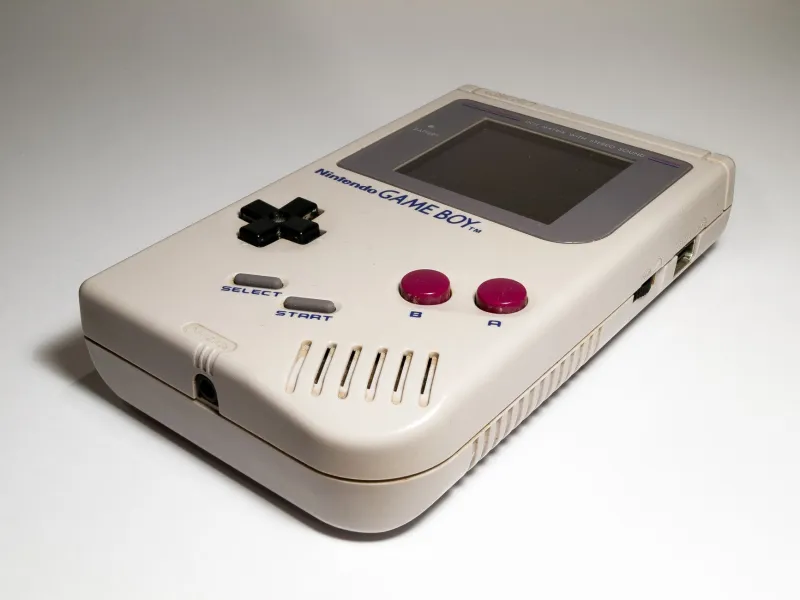
It's 2002. You're at a Walgreens checkout line somewhere in suburban Ohio, and there's a spinner rack next to the candy bars holding small packs of Nintendo cards. You buy one, take it home, run it through a plastic attachment on your Game Boy Advance, and suddenly you're playing a new mini-game that didn't exist on your device five minutes ago. Content delivered instantly through a physical medium, purchased impulsively at retail, playable anywhere.
Sound familiar? It should. That's basically the mobile gaming economy — just twenty years early and running on cardstock instead of a cellular network.
The Nintendo e-Reader gets dismissed a lot, and look, the dismissal isn't entirely unfair. It underperformed commercially in the US, it required a learning curve, and it never built the critical mass of content it needed to really take off. But writing it off as a failed gimmick misses something genuinely important: the e-Reader was operating on a conceptual framework that the entire gaming industry eventually caught up to. Nintendo just got there before the infrastructure existed to support it.
The Core Idea Was the App Store Before the App Store
Think about what the e-Reader was actually proposing. You have a base device — the Game Boy Advance — that functions as a platform. Content isn't baked into the device itself; it's delivered through external media that you acquire separately, in small chunks, at accessible price points. Each card was essentially a micro-purchase. A dollar or two, sometimes bundled in packs, for a discrete piece of gameplay content.
That is, structurally, exactly how mobile gaming monetization works. The App Store didn't invent the concept of bite-sized, low-cost digital content — it just digitized the delivery mechanism and removed the physical card from the equation. When Zynga was building FarmVille's virtual economy or when King was selling Candy Crush lives for a dollar a pop, they were operating on the same psychological and commercial logic that Nintendo had sketched out with those little dotted strips on e-Reader cards.
The difference is that in 2002, there was no wireless delivery system capable of making that model frictionless. You had to go to a store, find the cards, and physically scan them. That friction killed the e-Reader's mainstream appeal. But remove the friction — which is precisely what smartphones did — and the underlying idea becomes the dominant model for an entire industry.
Scan-to-Play Was QR Codes Before QR Codes Were Cool
Here's another angle worth sitting with. The e-Reader's dotcode technology — those dense strips of encoded data along the edge of each card — was functionally doing what QR codes do now. Point a reader at a physical object, decode the data, unlock content. That's it. That's the whole trick.
QR codes existed in 1994, invented by a Toyota subsidiary for inventory tracking. They didn't become a mainstream consumer technology in the US until roughly 2020, when pandemic-era restaurant menus forced the general public to figure them out. The e-Reader was trying to mainstream that scan-to-unlock behavior in 2002, targeting kids and families, and it nearly worked.
Today, scan-to-play mechanics are everywhere. Pokemon GO built an entire trading system around QR codes. McDonald's Happy Meal promotions regularly include scannable AR content. Hasbro has experimented with physical toys that unlock digital game content. Every single one of these products is operating on the same conceptual foundation that the e-Reader laid. The hardware just got small enough and ubiquitous enough to make it viable.
Digital Collectibles and the e-Reader's Spiritual Legacy
Let's talk about something that might be uncomfortable for some retro gaming purists: NFTs. No, stay with me here. The broader concept of digital collectibles — owning a unique or limited piece of digital content that has both functional and aesthetic value — is something the e-Reader was genuinely exploring before that language existed.
Each e-Reader card was, in a meaningful sense, a physical token that unlocked a specific digital asset. Some cards were common, some were rare, some were regionally exclusive or promotional. Collectors assigned value based on scarcity and desirability. The secondary market for certain cards developed organically. Sound familiar?
Now, the e-Reader cards had something that most digital collectibles sorely lack — they were actually fun to use. Scanning a rare promotional card and getting a unique Animal Crossing villager or an exclusive NES game felt like a genuine reward. The collectibility and the functionality were inseparable. That's a design philosophy that a lot of modern digital collectible projects have failed to replicate, which is arguably why so many of them collapsed. Nintendo understood, even if implicitly, that the thing you collect has to actually do something.
Why It Didn't Work Then — And Why That Doesn't Matter
The e-Reader's commercial failure in the United States came down to a few concrete problems. The device was an add-on to a handheld that was already competing for space in kids' Christmas lists. The card content, while creative, wasn't always substantial enough to justify the purchase to skeptical parents. And critically, Nintendo didn't build a large enough library fast enough to create the sense of ecosystem momentum that the platform needed.
But here's the thing about being ahead of your time: the timing problem is temporary, and the idea is permanent. The e-Reader's failure wasn't evidence that the concept was wrong. It was evidence that the concept was early. The smartphone solved every logistical problem the e-Reader had — the hardware became ambient, the content became instantly deliverable, and the price points became even more granular. The vision survived; only the medium changed.
The e-Reader Deserves Its Revisionist History Moment
Every decade or so, the gaming press goes back and reconsiders something that flopped and finds the genius hiding inside the failure. The Virtual Boy gets its reassessment articles. The Sega Dreamcast has been rehabilitated into a beloved cult classic. The e-Reader is overdue for that same treatment.
When you look at the device through the lens of what gaming actually became — microtransactions, scan-to-play AR, digital collectibles, bite-sized mobile content — the e-Reader starts to look less like a weird dead end and more like a prototype for the future that got shelved too soon. Nintendo was asking the right questions in 2002. The rest of the industry spent the next fifteen years building the infrastructure to answer them.
That's not a failed gimmick. That's a vision statement that arrived before its time. And honestly? That's worth a little more respect than the e-Reader usually gets.