Before amiibo, There Was a Card: How the e-Reader Quietly Rewrote the Rules of Gaming Hardware
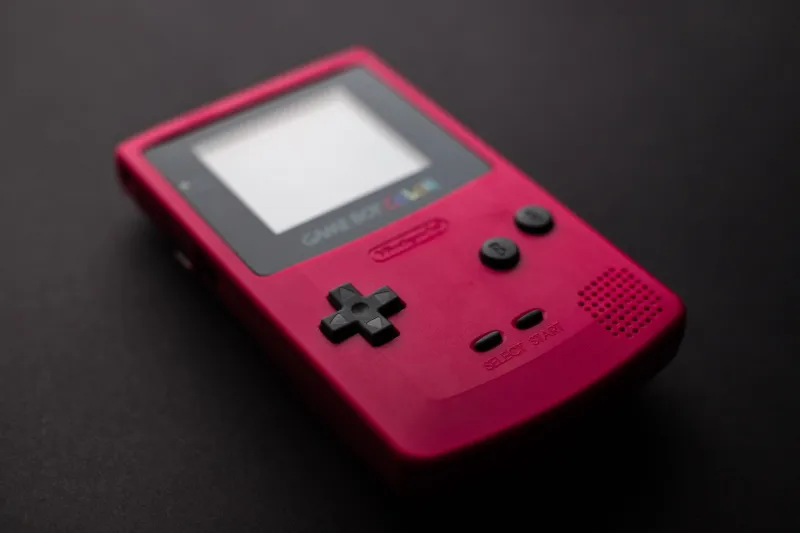
There's a version of gaming history where the Nintendo e-Reader gets a chapter of its own — not a footnote, not a curiosity buried in a listicle about forgotten peripherals, but a genuine, substantial chapter about a device that dared to ask a question nobody else was asking in 2002: what if your game content lived somewhere physical, somewhere you could hold it, trade it, and carry it in your back pocket?
That question didn't get answered on the e-Reader's watch. Sales were modest, third-party support dried up, and Nintendo pulled the plug on US operations before the accessory ever found its footing. But the question itself? It never went away. And when you start tracing the DNA of some of Nintendo's most successful modern hardware moves, you keep ending up back at that same little slot on the side of your Game Boy Advance.
The Core Idea Was Always About Ownership
Strip away the dot codes and the card stock and the NES emulation, and what the e-Reader was really selling was a philosophy: content you physically own should do something. It shouldn't just sit on a shelf looking pretty. It should interact with your games, unlock new experiences, and bridge the gap between the analog and digital worlds.
Sound familiar? It should. That's basically the entire pitch for amiibo, Nintendo's NFC-enabled figurine line that launched in 2014 and went on to sell hundreds of millions of units worldwide. Tap a figure to your controller or console, and the game responds — unlocking characters, storing save data, triggering bonuses. The delivery mechanism is different (a plastic figure versus a paper card), but the underlying design logic is nearly identical to what the e-Reader was attempting over a decade earlier.
The e-Reader just didn't have the manufacturing scale, the franchise firepower, or frankly the timing to pull it off. Amiibo launched alongside Super Smash Bros. for Wii U, one of Nintendo's biggest system sellers ever. The e-Reader launched alongside... well, a handful of Game & Watch ports and some NES classics that people could already play on actual hardware they owned. Context matters enormously in hardware adoption, and the e-Reader never caught the right wave.
Augmented Reality Before AR Was a Buzzword
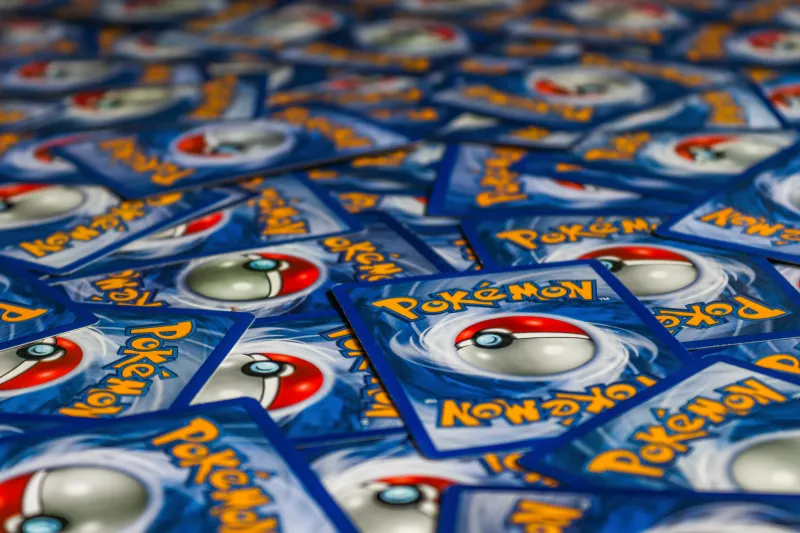
Here's one that tends to surprise people: the e-Reader's battle card system for Pokémon, which let you scan cards to trigger in-game effects, was operating on a conceptual framework that AR gaming would later formalize and popularize. You were using a physical object in the real world to manipulate a digital environment. The feedback loop was primitive by today's standards, sure — you're not exactly holding your GBA up to scan a battlefield — but the intent was the same.
Nintendo would revisit this territory much more visibly with the 3DS AR Cards, those little flat cards packed in with every system that turned your coffee table into a dragon's lair or a shooting gallery. The e-Reader's influence on that design philosophy isn't documented in any Nintendo press release, but the conceptual throughline is hard to ignore. Physical object. Digital response. Surprise and delight.
And then Pokémon GO happened, and suddenly the entire mainstream gaming conversation was about exactly the kind of real-world/digital-world interaction the e-Reader had been fumbling toward in 2002. The e-Reader didn't cause Pokémon GO, obviously. But it was asking the same questions about what games could be when they stopped being confined to a screen.
The Hardware-Software Integration Nobody Talked About
One thing that genuinely holds up when you look back at the e-Reader is how elegantly the hardware and software were designed to work together. The device itself was a simple peripheral — it attached to your GBA's link cable port, added a scanning strip, and got out of the way. No batteries, no complicated setup, no firmware updates. You bought cards, you scanned cards, stuff happened. The friction was almost zero.
That kind of intentional simplicity is something modern gaming accessory designers still struggle with. How many peripherals have you bought that required a driver update, a companion app, a separate power source, and three trips to a support forum before they worked? The e-Reader's designers understood that the magic needed to feel immediate, or it wouldn't feel like magic at all.
This is actually something contemporary game designers could stand to relearn. The best hardware-software integrations aren't the most technically impressive ones — they're the ones that disappear. When the e-Reader was working, you weren't thinking about dot codes or infrared sensors. You were thinking about the Excitebike track you just built, or the new move you just unlocked for your Pokémon. The technology served the experience, not the other way around.
What Killed It Wasn't the Idea
It's worth being honest about why the e-Reader struggled, because the reasons are instructive. The content library in the US was thin and inconsistently compelling. Some cards were genuinely exciting — the NES game cards in particular felt like magic — but too many were trivia questions and mini-games that wore out their welcome fast. Nintendo needed killer app content and never quite delivered it at scale.
There was also a chicken-and-egg problem with the card packs. Without a large install base, retailers weren't motivated to stock cards aggressively. Without widely available cards, consumers weren't motivated to buy the peripheral. Nintendo never found the intervention point that would have broken the cycle.
Japan got a much richer content library, including e-Reader support for Animal Crossing on the GameCube — a feature that let players scan cards to unlock furniture, villagers, and NES games. That integration was genuinely brilliant, and it's the version of the e-Reader story that makes you feel the loss most acutely. US players got a taste of it with a few Animal Crossing e-Reader cards, but the full experience remained largely out of reach.
The Lesson That Keeps Paying Out
Nintendo has never been a company that abandons a good idea just because the first execution didn't land. The e-Reader's core concepts — physical objects that unlock digital content, hardware that bridges real and virtual worlds, collectible media with interactive functionality — kept resurfacing in different forms until they found the right product-market fit.
That's the real legacy here. Not a cautionary tale about a failed peripheral, but a proof of concept that took years to fully mature. The e-Reader was Nintendo thinking out loud about the future of interactive media, and if the thinking was sometimes ahead of the infrastructure needed to support it, well — that's what being early looks like.
Next time you tap an amiibo to your Switch and watch your game respond, or pull up Pokémon GO and see your neighborhood transformed into a hunting ground, spare a thought for the little card scanner that was already dreaming about all of it. It deserved better then. It deserves recognition now.