Stuck in the Scan Zone: Why Emulating e-Reader Games Is a Nightmare Nobody Warned You About
If you've ever tried to play a classic SNES or Game Boy game through an emulator, you already know the drill. Download the ROM, fire up your emulator of choice, maybe fiddle with a controller mapping for ten minutes, and you're off. It's not glamorous, but it works. The e-Reader, though? The e-Reader laughs at that process.
Nintendo's little card-scanning peripheral for the Game Boy Advance is one of the most technically fascinating pieces of hardware the company ever produced — and it's also one of the hardest to meaningfully preserve. If you've been trying to relive your dot code days on modern hardware, you've probably already run into the wall. Let's talk about why that wall exists, what the emulation community has managed to do anyway, and why Nintendo has been suspiciously quiet about the whole thing.
The Dot Code Problem Is a Hardware Problem
Most emulation challenges come down to software — replicating the logic of a CPU, mimicking audio chips, getting the timing right on a decades-old graphics pipeline. Hard stuff, but ultimately solvable. The e-Reader's core mechanic is different. It's physical.
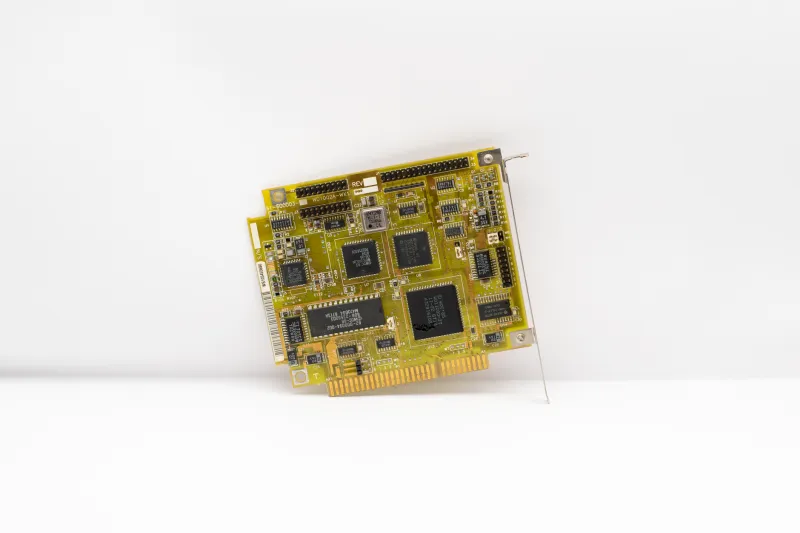
The dot codes printed along the edges of e-Reader cards aren't QR codes or standard barcodes. They're a proprietary format developed by Olympus called Dotcode — a high-density optical encoding system that requires a specific infrared sensor array to read accurately. The e-Reader cartridge contained that sensor hardware built right in. When you swiped a card, you were feeding raw optical data into a decoder running on the GBA itself.
To emulate that process digitally, you'd need to either perfectly simulate the optical scan from a digital image of the card (accounting for print quality, card wear, scan angle, and lighting) or you'd need to pre-decode the dot code data and inject it directly into the emulator's memory at the right moment. Neither option is clean. The first is technically brutal. The second requires someone to have already decoded every card you want to play — and that work is painstaking, card by card.
Some cards also had multiple strips that needed to be swiped in sequence, with data combining in real time. Emulating that chain of events without the physical hardware is, to put it gently, not a casual Saturday afternoon project.
What the Emulation Community Has Actually Pulled Off
Here's where things get genuinely impressive. Despite all of the above, dedicated folks in the retro gaming preservation community haven't given up.
The VBA-M emulator and, more recently, mGBA have both added varying levels of e-Reader support. The approach that's gained the most traction involves pre-decoded "bin" files — essentially the raw data payload extracted from individual cards — that can be loaded directly into an emulator session without any simulated scanning at all. It's not elegant, but it works. You lose the physical ritual of the swipe, but you get the actual gameplay.
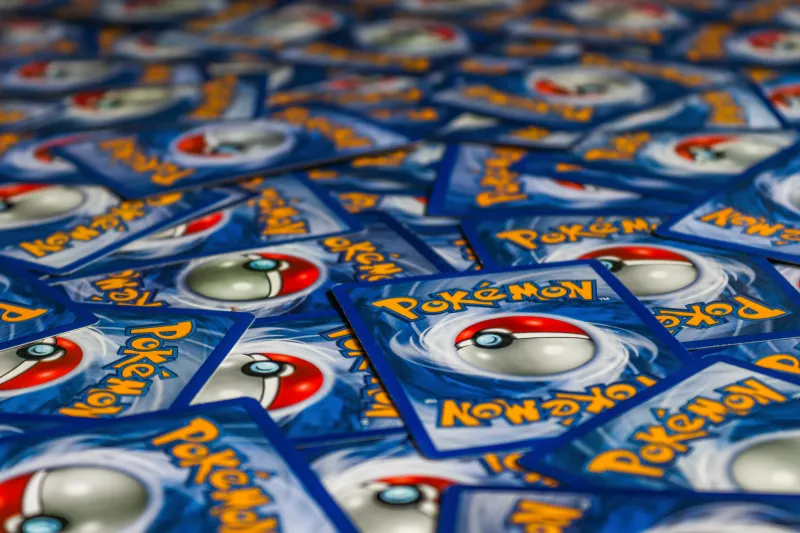
Projects like the e-Reader Preservation Project have done heavy lifting on the card-decoding side, working to digitize physical cards and extract their payloads. Fan communities on Discord and dedicated forums have coordinated scanning efforts, sharing high-resolution card images and decoded data files. It's grassroots digital archaeology, and it's the main reason any of these games are accessible at all outside of owning the original hardware.
That said, the library is far from complete. Rarer cards — limited regional releases, promotional giveaways, event-exclusive prints — remain unarchived. Every unpreserved card is a potential permanent loss, which brings us to the uncomfortable part of this conversation.
Nintendo's Silence Is Deafening
Nintendo has, over the years, made various moves toward acknowledging its own history. The NES and SNES Classic consoles, the Nintendo Switch Online retro library, the occasional Virtual Console offering — these all suggest some institutional appetite for preservation. The e-Reader, though, has been conspicuously absent from every single one of those efforts.
There's no official digital archive of e-Reader content. No Virtual Console port. No Switch Online integration. The games that lived on those cards — some of them genuinely excellent, like the NES Classics series and the Animal Crossing e+ expansions — exist in a kind of corporate limbo. Nintendo owns the IP. Nintendo isn't selling it. And Nintendo has historically been aggressive about going after fan preservation projects that touch its intellectual property.
The legal reality here is genuinely complicated. Even if you own the original cards, the legality of downloading a decoded bin file in the United States sits in a gray zone that courts haven't fully resolved. The DMCA's anti-circumvention provisions create real exposure for preservation projects, even when the underlying motivation is clearly archival rather than commercial.
Nintendo's silence isn't necessarily malicious — it might simply reflect the reality that re-releasing e-Reader content would require engineering work to replace the physical mechanic with something functional on modern hardware, and that's a non-trivial investment for a product line that sold modestly in the US to begin with. But the effect is the same either way: a chunk of gaming history is slowly fading, and the only people doing anything about it are volunteers working without legal cover.
Where That Leaves You Right Now
If you want to experience e-Reader games today, your most legally defensible option is still the original hardware — a GBA or GBA SP, the e-Reader cartridge, and physical cards. The hardware is aging, the cards are fragile, and supply is finite, but it's the real thing.
If you're exploring emulation, mGBA is your best bet for compatibility. The community resources around pre-decoded card data have grown substantially in the last few years, and a determined searcher can find a reasonable slice of the library. Just understand what you're getting: a functional approximation of an experience that was always meant to be tactile.
The deeper issue — the preservation gap, the legal gray zone, Nintendo's inaction — isn't going away on its own. The e-Reader represents a genuinely unique moment in gaming design, one where physical media and digital gameplay were fused in a way that still hasn't been replicated. Losing it to bit rot and legal ambiguity would be a real shame.
Somebody at Nintendo should probably be thinking harder about that. Until they do, the community will keep scanning.